
Begin with interest, not a price tag.
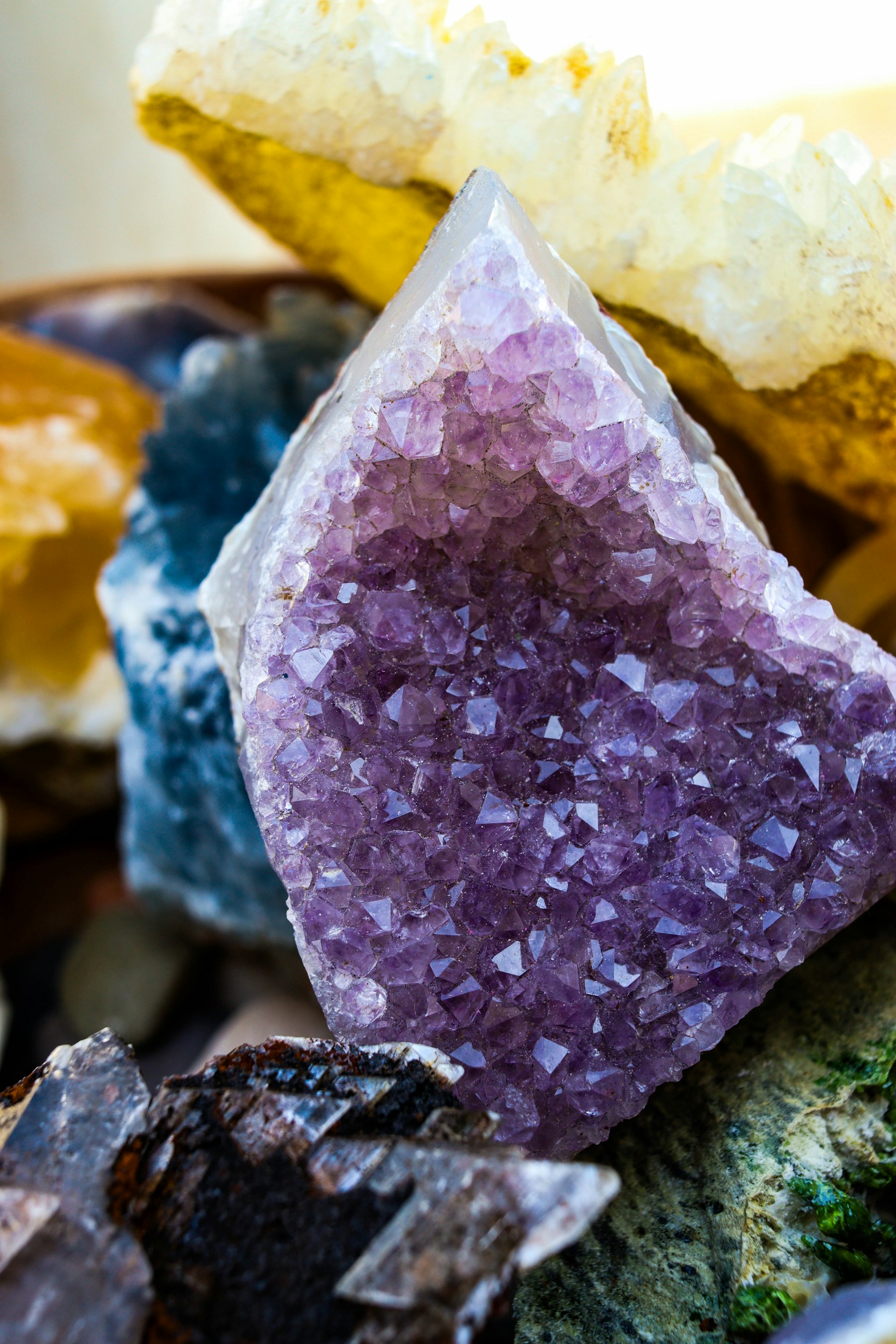
The best first specimen is one you enjoy looking at and can comfortably afford. Color might draw you in. Or perhaps it’s the shape of a crystal, a striking texture, or a connection to a place you love. You don’t need the biggest piece to begin a meaningful collection.
Read the label. Keep the label.
Look for a mineral name and a documented locality when one is available. A specific, reliable locality adds useful context; a vague or missing label is a reason to ask questions. Save the original label with the piece, and make a note of when and where you acquired it.
Ask about condition and treatment.
Natural crystals may have contact points, chipped tips, or breaks. Some specimens have been repaired, stabilized, dyed, coated, or otherwise treated. Those details should be disclosed. Ask for several clear photographs, dimensions, weight, and an explanation of anything you can’t see.
Choose a piece you can care for.
Different minerals respond differently to moisture, sunlight, and cleaning products. Ask for specimen-specific care instructions before cleaning or displaying your find. Choose a stable spot away from children and pets, and avoid using unknown minerals in water or food preparation.
Give your collection a little context.
A simple notebook is enough: specimen number, mineral name, locality as documented, seller, date, price, and what made you choose it. Your collection becomes more interesting when the information stays with the stone.
✧
← Back to the journal