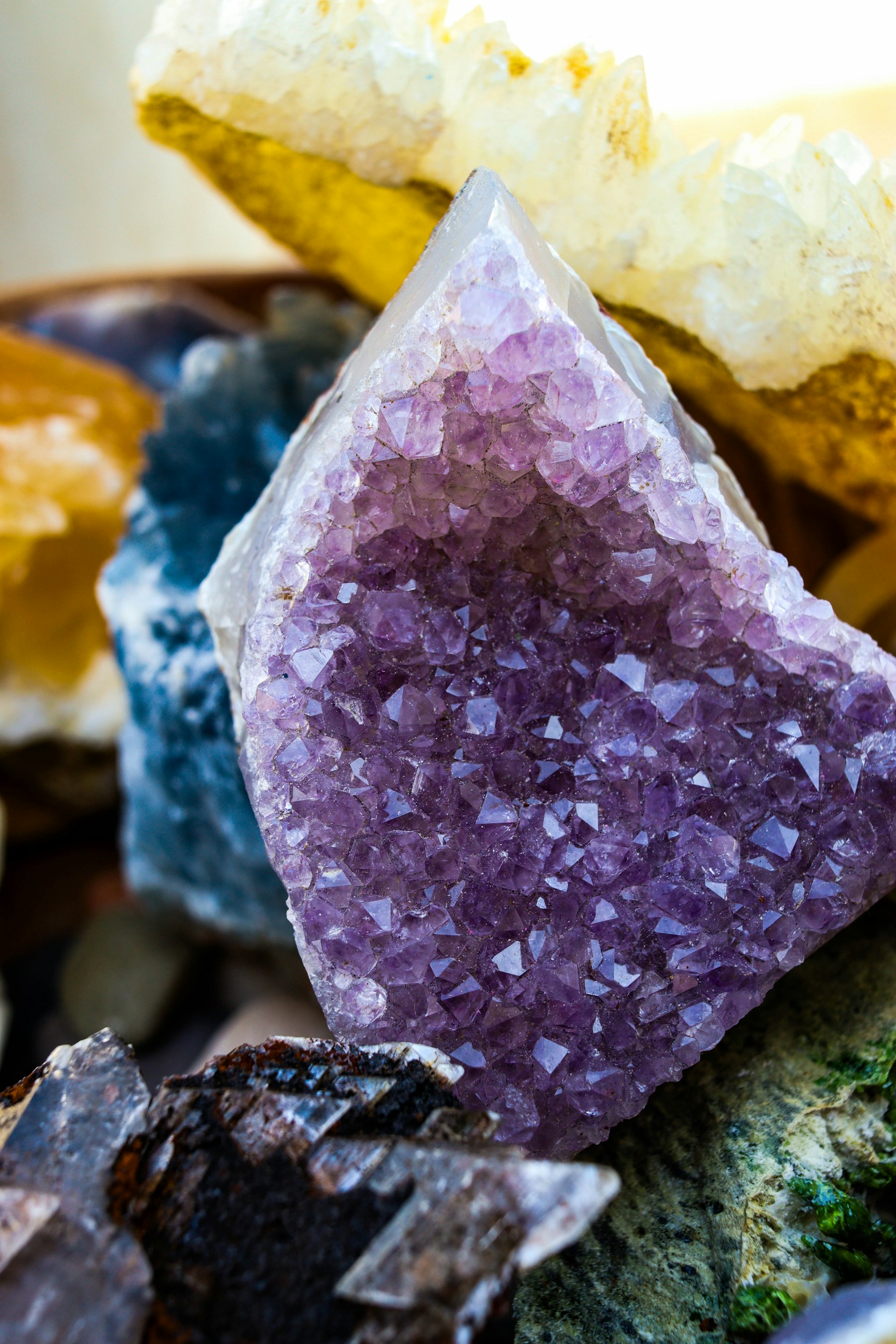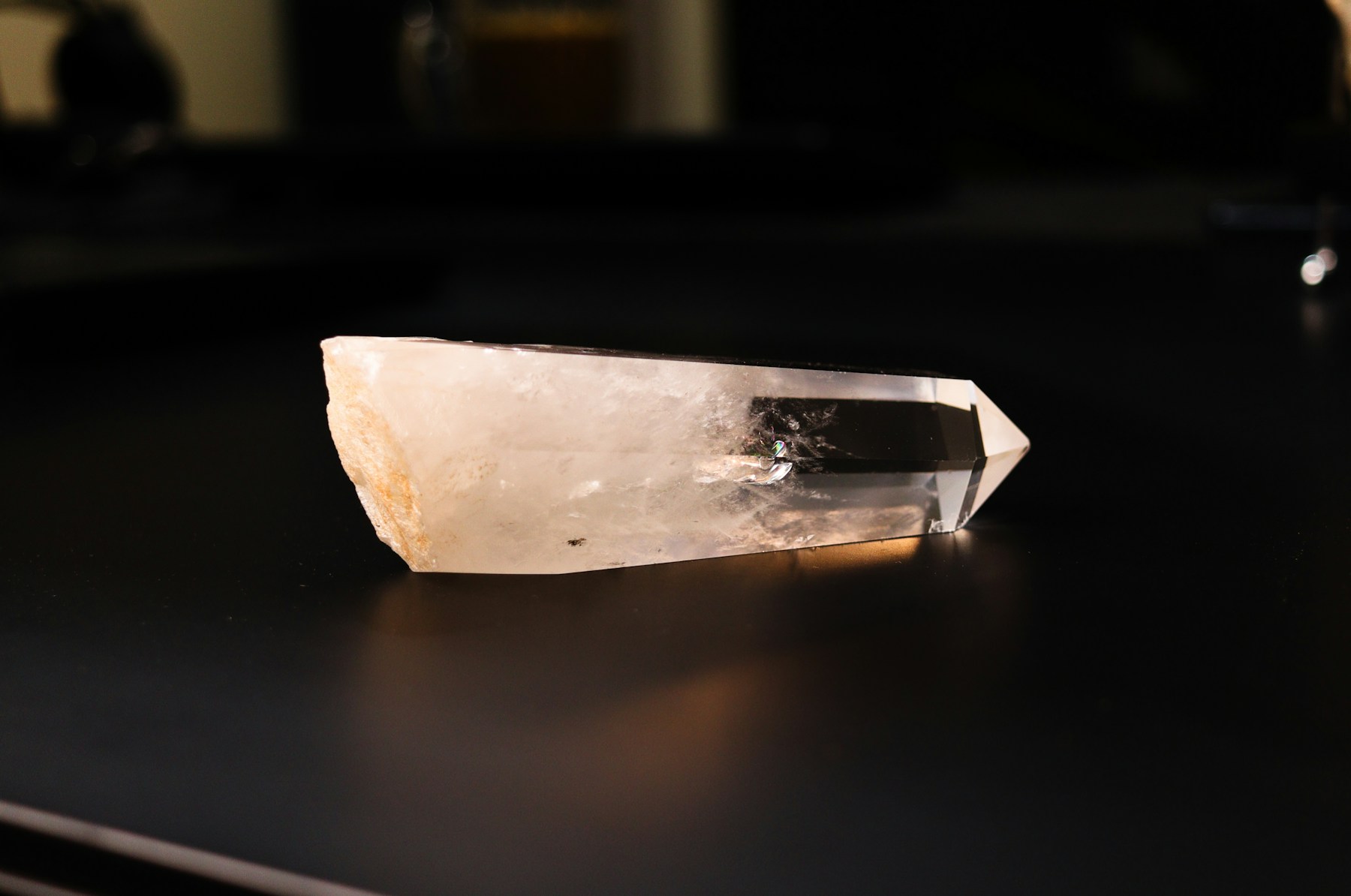

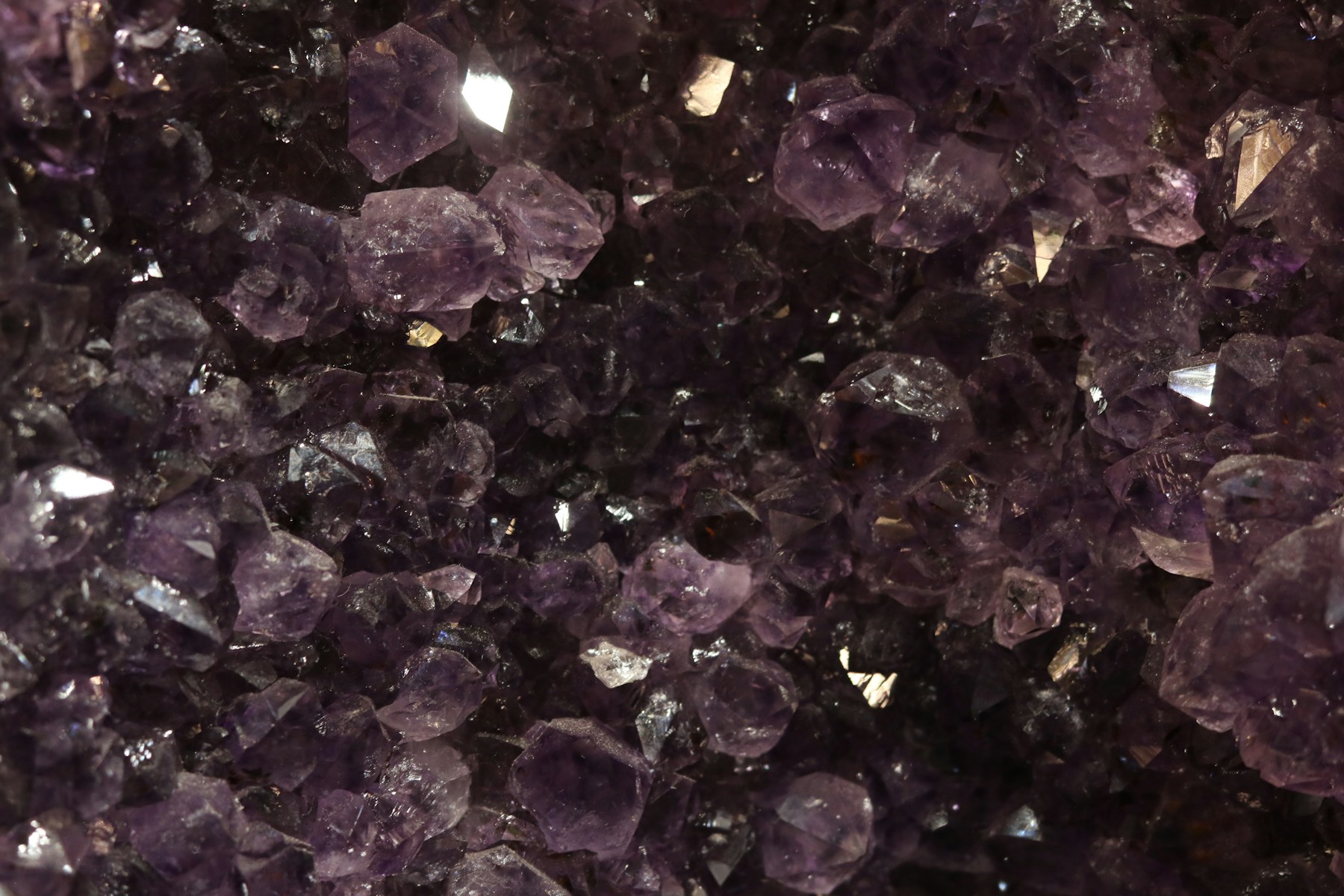
Color begins with light.
The color we see depends on how a material interacts with light. Some wavelengths are absorbed, while others are transmitted or reflected. The atomic structure and chemistry of a mineral help determine which parts of visible light reach our eyes.
Tiny ingredients can make a big difference.
Small amounts of certain elements can change a mineral’s color. These elements can take the place of others in the crystal structure. The same element may produce different colors in different mineral structures, so the story is more interesting than one ingredient producing one fixed shade.
A crystal’s structure matters, too.
Defects in a crystal’s atomic arrangement can also affect its interaction with light. Some are called color centers. Natural radiation can create or modify these defects over geological time. Color is therefore a record of more than chemistry alone.
Not every color is a reliable clue.
A single mineral can occur in several colors, and unrelated minerals may look remarkably similar. Lighting, crystal thickness, inclusions, and surface coatings can also change appearance. Color is a wonderful place to begin an observation, but it cannot identify a mineral on its own.
Keep asking how.
Next time a specimen catches your eye, look for subtle shifts across its surface. Is the color even, banded, or concentrated in one area? The question may take you from a beautiful object to a fascinating bit of earth science.
✧
← Back to the journal